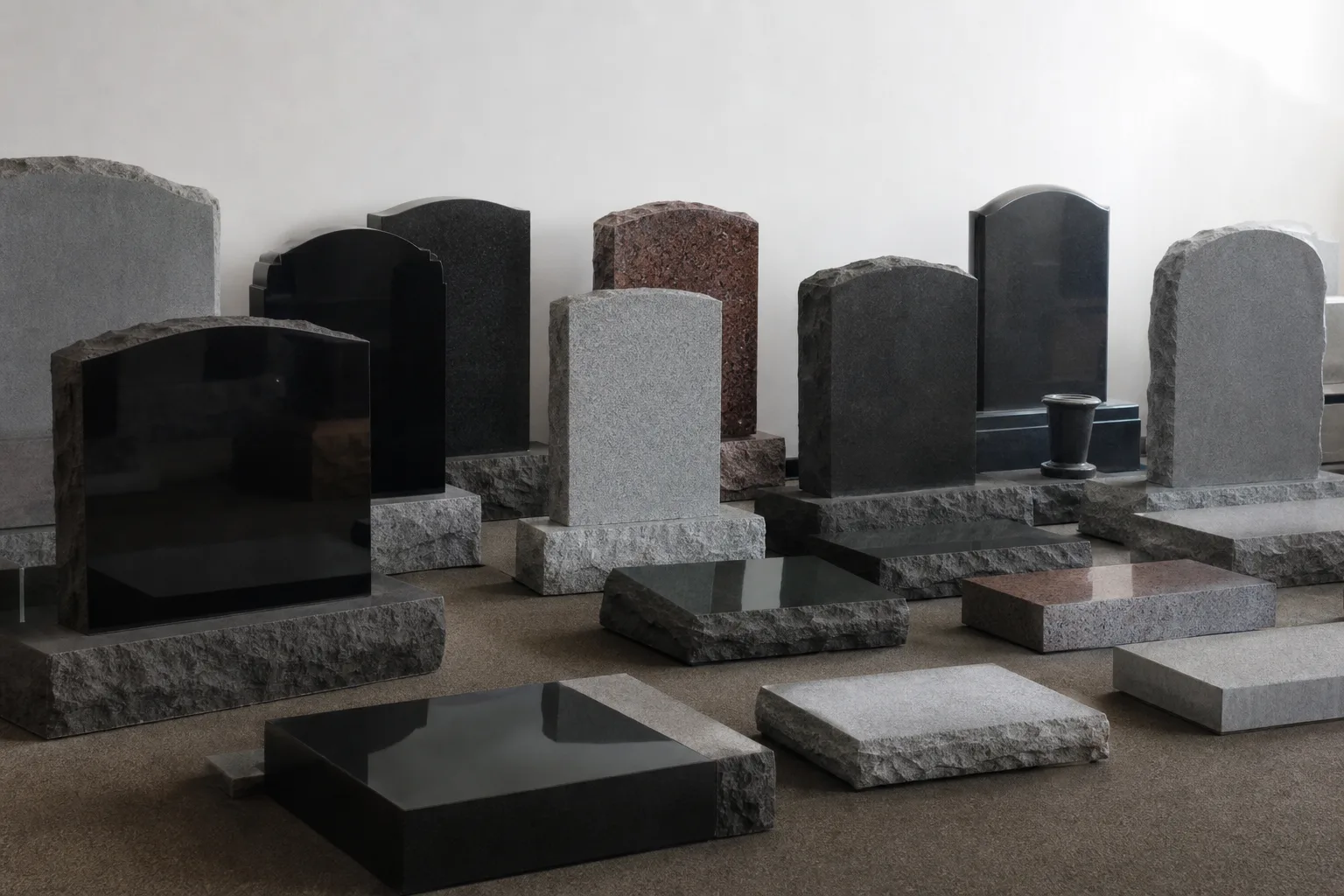
A walk through the permissions, the foundation work, the quotes and the lettering choices behind a single cemetery memorial, written down so the next person can skip the guesswork.
A drawing you love and a cemetery that will not permit it is an expensive combination, because deposits on monument work are usually taken before a permit application is filed, and a redesign after the stone has been ordered is rarely free. The order of operations that saves money is unglamorous: obtain the written rules for the specific section where the grave sits, read them line by line against the design, and only then sign anything. Most families do this in reverse, and most of the disappointment in memorial work comes from that inversion.
Why the rules change from one row to the next
A cemetery is rarely governed by a single standard. Older sections platted in the nineteenth century often permit upright monuments, kerbing (the low stone border set around a plot), and ornament that a lawn section opened in the 1970s forbids outright, because the newer ground was laid out for gang mowing and every marker must sit flush. Between those extremes sit hybrid sections that allow a low upright on a specified base, a slant marker, or a bevel marker only. The plot deed will name the section and block, and that designation, not the cemetery's general reputation, decides what is possible on that particular grave.
Getting the written version, not the verbal one
Ask the cemetery office, in writing, for the current memorial regulations and any section-specific supplement that applies to your plot, and ask for the revision date on the document. A phone conversation with a groundskeeper is not a permit, and staff turnover means the answer you get in March may not match the answer in September. Municipal cemeteries usually publish rules as an ordinance or an appendix to one, obtainable from the clerk. Church and fraternal grounds often keep a typed sheet that has been amended by hand over decades, and it is worth asking whether anything supersedes it. Keep the copy you receive; it is your evidence if a decision is later questioned.
The six limits worth reading twice
Height is usually given as a maximum overall dimension including the base, so a tablet that complies alone may fail once it is set on a four inch foundation. Footprint is expressed either in inches of width and depth or as a proportion of the grave space, and single graves in a family lot sometimes carry a narrower allowance than the lot as a whole. Material rules commonly restrict you to granite or bronze, excluding marble, limestone and sandstone for weathering reasons. Finish rules govern polish: some sections require the top and sides to be rock pitched or steeled rather than mirror polished. Kerbing and any planted or fenced enclosure are frequently prohibited. Lettering can be restricted too, by depth, by whether raised letters are allowed, and occasionally by whether photoceramics, laser etched portraits or QR plaques are permitted at all.
Checking a design against the document
Work from the monument dealer's scale drawing, which should show the die (the upright stone), the base, the total assembled height, and every inscription panel with its letter height. Compare each figure to the corresponding clause and write the clause number next to the dimension. Where the rules give a maximum and the drawing gives the same number exactly, ask what tolerance the cemetery applies to sawn stone, since granite is cut to fractions and a quarter inch over has been enough to stall an installation. Confirm who pours the foundation and to what specification, because some grounds do this work themselves and bill separately. Then ask the office to review the drawing informally before the deposit clears.
Putting the answer in writing before money moves
The purchase agreement should name the cemetery, the section, the block and the grave, and it should state what happens if the cemetery rejects the design: a refund, a credit, or a redesign at the dealer's cost. The Federal Trade Commission oversees disclosure practices in the funeral goods trade, and its remit is a useful reminder that you are entitled to an itemized written agreement rather than a verbal understanding. A dealer who works in that cemetery regularly will often have the rules on file and will volunteer the constraints unprompted, which is itself a good sign.
The stone will stand for generations, and the twenty minutes spent reading a two page regulation sheet is the cheapest part of the whole undertaking. Read it before you form an attachment to a shape.